Want to be in the loop?
subscribe to
our notification
Business News
FOREIGN FIRMS SNATCH UP LOCAL LOGISTICS INDUSTRY
Vietnam’s existing logistics market is valued at about $50 billion. There are around 1,300 logistics firms, 5 per cent of which are foreign-invested companies dominating the market with a share of approximately 75 per cent. Most local firms are small-scale companies with limited capital and human resources.
“Realising the growing and increasingly liberal logistics market, many global logistics companies have strengthened their presence in Vietnam,” said a recently released Seiko report on Vietnam’s logistics industry.
For instance, Hong Kong’s Kerry Integrated Logistics bought Vietnamese Tin Thanh’s stakes to set up Kerry TTC. DHL Vietnam offers comprehensive shipping and e-commerce solutions to support the expansion of domestic and cross-border online trade. Gefco Sotrans, a joint venture of the European leader in automotive logistics Gefco Group, and one of well-known local logistics firms, Sotrans, has officially received its investment certificate. The company will offer a comprehensive logistics service for the car and two-wheeler industry, covering warehousing, the supply of components, vehicle and spare parts distribution, and the custom clearance of imported cars.
Le Hoang Oanh, vice president of local Avina Logistics JSC, told VIR that many South Korean and Japanese firms currently wanted to buy Avina, which had a network of partners from 60 nations worldwide, and which grew 20 per cent last year.
“In addition to our firm, many other local firms are also on the radar for foreign firms,” Oanh said. “I believe that in the near future, Vietnam’s logistics market will be totally controlled by foreign firms.”
Beketzhan Zhumakhanov, Kazakshtani Ambassador to Vietnam, said that in the months to come a delegation of transport firms from his nation would come to Vietnam in search of investment opportunities.
“Vietnam’s economy is strongly growing, with a population of more than 90 million people. This has pushed up the demand for transport and created opportunities for Kazakshtani firms,” Zhumakhanov said.
Yerzhan Zhakishev, vice president of United Transport Logistics Company – a joint venture between the three largest railway firms from Russia, Belarus, and Kazakshtan, also said that this firm wanted to co-operate with Vietnam Railways to expand its operation in Vietnam.
According to Oanh, many logistics joint venture companies in Vietnam will likely become wholly foreign-invested in the future. Initially, foreign firms want to establish joint ventures with local companies as a way to gradually control the local market, before growing into a wholly foreign-invested company.
For example, a joint venture between Japan’s Nippon Express and Vietnam’s Transimex will end its operation in 2018. At this point, the joint venture is expected to become a wholly Japanese invested firm. To expand its logistics business in Vietnam, Nippon Express has established Nippon Engineering-Vietnam, which also operates in logistics, in addition to construction, design, and consultancy.
In Vietnam, the market access barriers for logistics are almost all removed. According to Vietnam’s World Trade Organization (WTO) service sector commitments, as of January, 11, 2014, foreign investors are permitted to provide most types of logistics services in the country subject to proper licensing requirements.
Still, the problem is that foreign investors suffer differences in the understanding and application of local investment licensing agencies.
In September 2015, the Ministry of Industry and Trade issued Dispatch No.9911/BCT-KH on creating a roadmap to open up the market for foreign logistics investors. It clearly states that the local authorities should directly apply related provisions under Vietnam’s WTO commitments, which use the United Nations’ Central Product Classification (CPC) codes. For example, the following sectors are now open to wholly foreign-invested enterprises: storage and warehousing services (CPC 742), and freight transport agency services (CPC 748). In addition, a number of sectors require joint ventures with Vietnamese partners, such as freight transport services by sea-going vessel (CPC 7212), freight transport services by non-sea-going vessel (CPC 7222), and freight transport services by railway (CPC 7112).
Source: VIR
Related News
MEMBER CORNER / PROMOTIONS
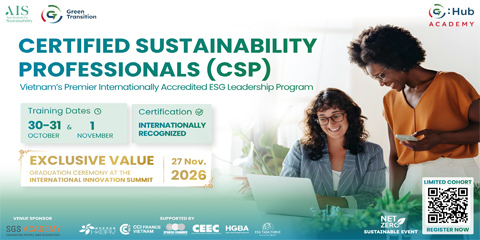
HCMC | CERTIFIED SUSTAINABILITY PROFESSIONAL (CSP) TRAINING | REGISTRATION OPEN
As sustainability becomes deeply embedded in corporate strategy and supply-chain operations across Vietnam, Hong Kong Business Association Vietnam is pleased to endorse the upcoming Certified Sustainability Professional (CSP) training program by the Asia Institute for Sustainability (AIS) - a premier internationally recognized ESG credential in Vietnam.
VIETNAM ECONOMY INVESTMENT
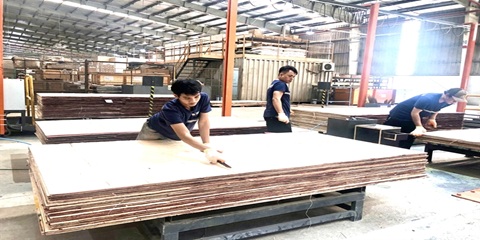
HCM CITY SAYS HOW IT PLANS TO ACHIEVE 10-11% ANNUAL EXPORT GROWTH FOR REST OF DECADE
The southern economic hub aims to strengthen its role as the country’s largest import-export centre while developing into a regional transhipment centre in Southeast Asia, supported by green and digital transformation and a circular economy. HCM City has outlined measures to expand production capacity, cut logistics costs, diversify export markets, and help businesses meet increasingly stringent international standards as it targets average annual export growth of 10-11 per cent through 2030.
VIETNAM ECONOMY INVESTMENT
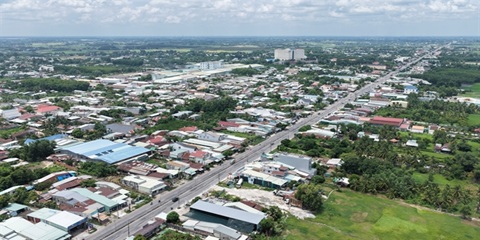
HCM CITY LEADS ECONOMIC RESTRUCTURING IN SOUTHEAST REGION
According to Associate Professor, Dr Vũ Tuấn Hưng, director of the Institute of Social Sciences of the Southern Region, the Southeast is a strategically important socio-economic space in Việt Nam’s development given its advantages in location, industry, trade, services, logistics, science and technology, urbanisation and human resources.
TECHNOLOGY
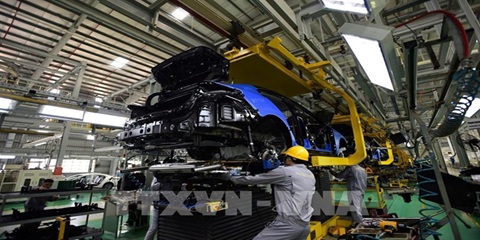
DIGITAL TRANSFORMATION TURNED INTO PRACTICAL TOOLS FOR PEOPLE, BUSINESSES
Việt Nam is moving its digital transformation agenda beyond policy frameworks and individual technology platforms towards practical applications that address everyday needs, as authorities seek measurable outcomes from science, technology and innovation. Under Politburo Resolution No. 57-NQ/TW issued on December 22, 2024, the implementation is increasingly shifting from simply completing assigned tasks towards developing concrete products and services for citizens and businesses.
TECHNOLOGY
APPLYING TECHNOLOGY FOR ECONOMIC TRANSFORMATION
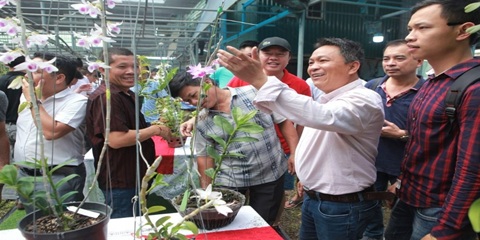
Having completed its new rural development program, Hanoi is shifting its focus toward improving development quality and building smart, sustainable rural areas. The transformation of Dong La orchid-growing village in An Khanh, a western commune of Hanoi, shows how digital technology is becoming a driver of production, market expansion, and higher incomes for local residents.
MEMBER CORNER / PROMOTIONS
VIGLACERA HONORED AS THE "LEADING GREEN INDUSTRIAL REAL ESTATE DEVELOPER 2026"
Organized by the Vietnam Investment Review, this prestigious awards program recognizes industry pioneers advancing eco-industrial parks, clean energy transition, and rigorous ESG standards. Outperforming competitors through a rigorous evaluation, Viglacera Corporation – JSC proudly ranked among the Top 5 highest-positioned enterprises in the Leading Green Industrial Real Estate Developers 2026 category, reinforcing its premier position in Vietnam’s industrial real estate sector.
Events Sponsors






















